How to Evaluate a Startup's Technology
9 min readTechnical due diligence is closer to buying a used car than conducting an audit. The real signals that predict engineering quality are few, specific, and almost never on the standard checklist.
Building got cheaper. Learning did not.
LLMs removed the build constraint that motivated the original Minimum Viable Product (MVP) framework. But the real bottleneck was never building, it was learning with what you had built. When features cost nothing, discipline about what to build becomes the scarcest resource.
Read essayWhy I stopped using IDEs after eighteen years, and why you might too
Hand-editing code in an IDE is micromanagement; you only need it if you can't instruct and guide your LLM well enough. After eighteen years of IDEs, from Borland to JetBrains, I stopped using them entirely.
Read essay
A scraped bulletin, a borrowed Scorpio, a flat tyre in the desert, and a space rock that turned out to be four and a half billion years old.
Read postTechnical due diligence is closer to buying a used car than conducting an audit. The real signals that predict engineering quality are few, specific, and almost never on the standard checklist.
When AI can generate anything, choosing well becomes the binding constraint on quality. Taste is not subjective preference but pattern recognition developed through exposure, and it is now the scarcest resource in product development.
The most valuable AI companies of the next decade will not look like AI companies. They will embed intelligence invisibly into existing workflows, bypassing the behaviour change tax that kills most standalone AI products.
Early-stage AI founders treat moats as a prerequisite when they are an outcome. The real early-stage advantage is learning velocity - the speed at which you convert experiments into knowledge about what works.
Nobody would one-shot a hospital. A hospital is millions of tiny prompts, each scoped to the expertise of the person receiving it. Software built with LLMs is no different. The skill is not writing a better prompt. It is building and managing the tree.
A framework for thinking about AI strategy that goes beyond the hype cycle and focuses on what actually matters for building lasting competitive advantage.
Hard-won lessons from a decade of building and advising startups. Some of these are obvious in retrospect. None of them were obvious at the time.

P.G. Wodehouse and Terry Pratchett are the two finest practitioners of the funny sentence in the English language. If you haven't read either, you're about to have a very good month.
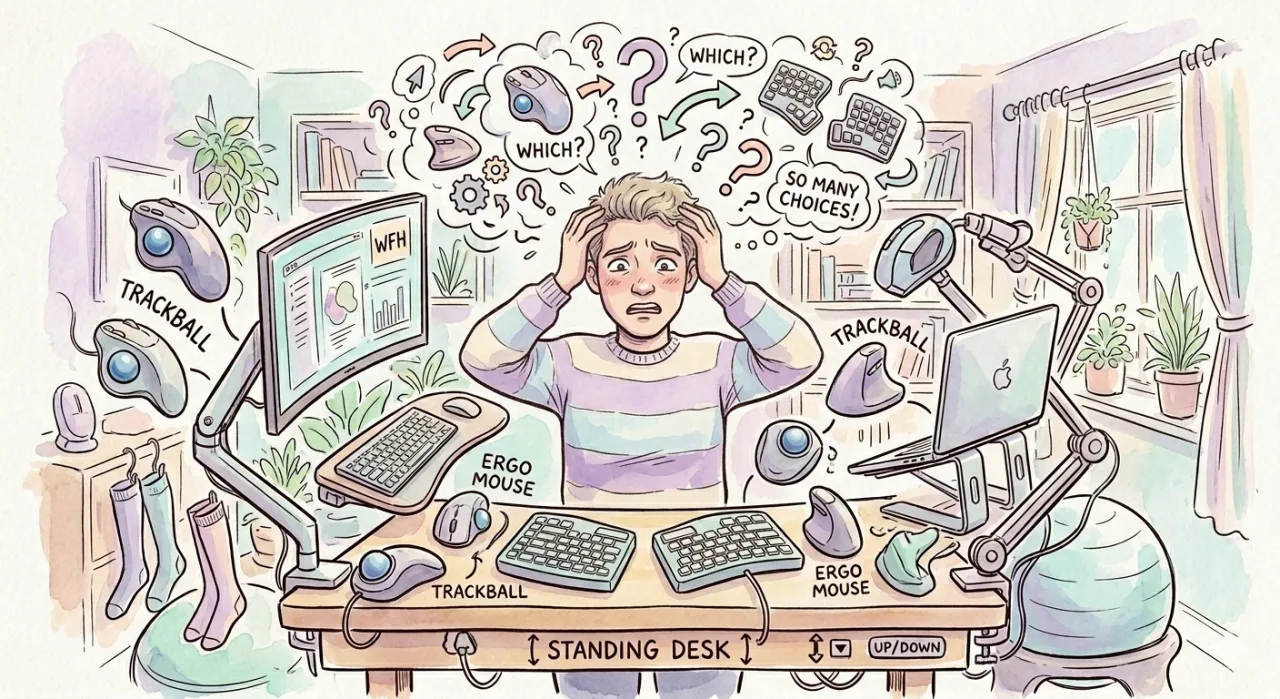
It starts with a sore wrist and ends with strong opinions about lumbar support. A self-aware guide to the ergonomics obsession, with some genuinely useful advice buried in the self-mockery.

First Class AC on Indian Railways is a lie told in linen and plywood. But at 10pm, when the train pulls out and the platform slides away, it becomes the most romantic way to travel in India.